
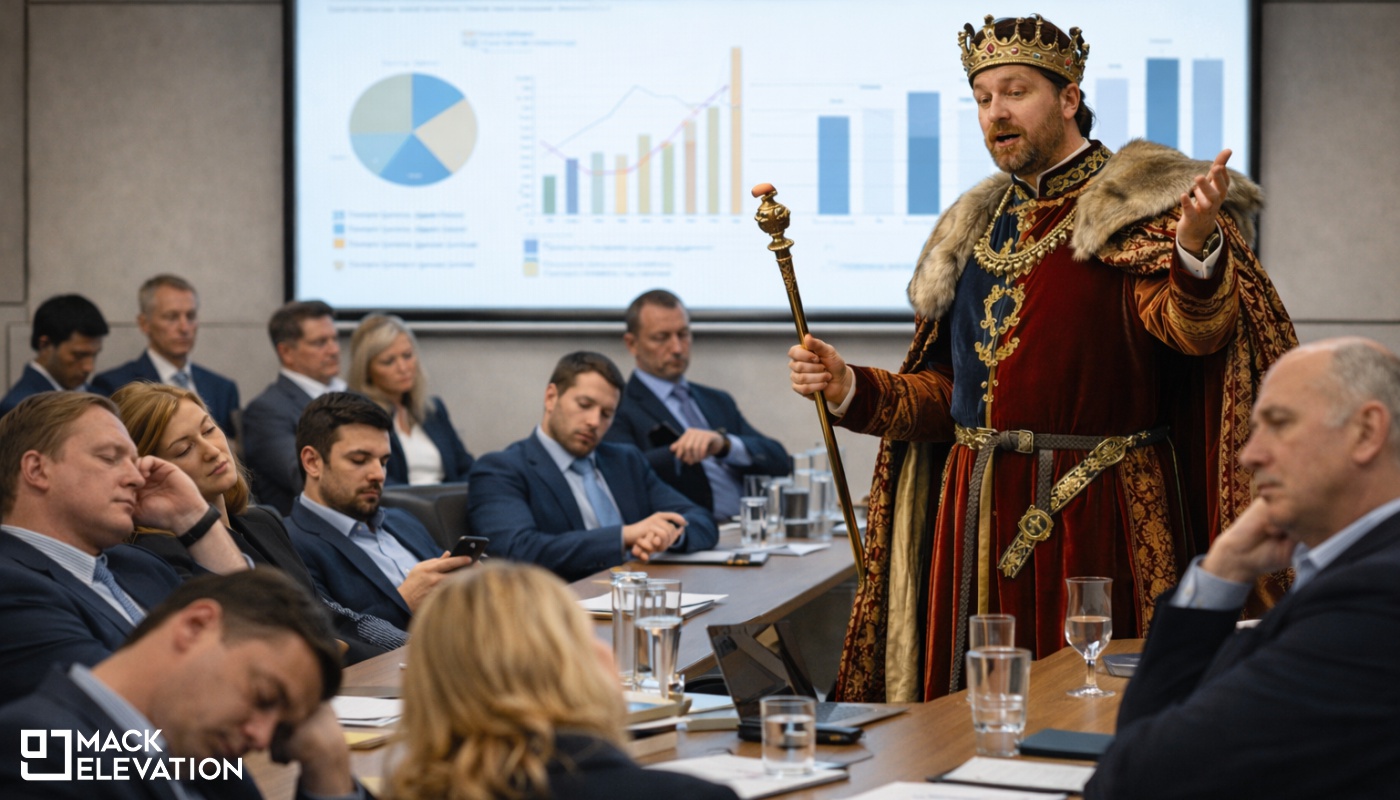
Most leaders don’t have strategy problems. They have a problem with presence.
I was recently coaching a young leader — sharp, respected, and persuasive. His meetings were polished. His decks were tight. His energy? Energetic.
But his impact? Overwhelmed others. Customers were gun-shy. His team was cautious. And his conversations felt a bit too scripted.
And then I shared what I’ve been hearing. A senior merchandising leader once told me, “Most suppliers waste my time.”
Another said, “There’s too much talking at us, not enough listening.”
One more hit it bluntly: “Ninety percent of the data shared? I already know.”
Yet most sales and marketing leaders keep presenting harder, faster, and longer.
Meanwhile, 3-in-4 meetings fail. We think we’re persuading. And our audience is mentally somewhere else.
So, I told him: “Stop presenting. Start facilitating.”
He looked at me like I’d asked him to give up control. Because that’s exactly what it felt like.
But research from Accenture shows that even great products fail when sold with the wrong brand story. And the wrong story is the one where you’re the one taking up all the oxygen in the room.
Leadership isn’t about holding court. It’s about creating space for others.
Psychologist Howard Gardner says leadership is the effective facilitation of a story. Not Presentation. Facilitation.
A facilitator:
- Removes roadblocks.
- Creates room for others to think by asking difficult questions.
- Bridges current reality and assists in the co-creation of the future.
The most insightful people aren’t impressed with answers. They elevate others with questions.
Here’s the hard truth: Only 10% of people are good listeners, yet 80% of people prefer a great listener over a great talker. Your advantage isn’t more words. It’s more curiosity.
In Every Conversation Counts, Riaz Meghji calls it assertive empathy: relationship first, logic second. Listening with authentic wonder instead of preparing your next clever point.
Because facts don’t change minds. Experiences do!
Stories and open-ended questions move people from critic to participant. It encourages others to suspend judgment and to enter the conversation with you.
Long decks don’t persuade. They put you into a trance.
Negotiation expert Neil Rackham found that experts convey fewer reasons to buy, not more. They protect their strongest points instead of watering them down.
So, I challenged this leader to continue embracing the art of facilitation and three ideas:
- Curiosity over control.
- Simplify your story to 5 slides. If it takes 40, you lack clarity.
- Don’t ever present a generic script ever again.
Then I told him, “Stop trying to win the room. Start trying to involve the room.”
Two weeks later, my phone rang. No scheduled call. Just energy on the other end.
“Dan — that was the best customer meeting I’ve had in years.”
Normally, he would have run 40 slides. This time, he brought only 3 slides.
He opened with one question: “What are we not talking about that we should be?”
The customer surfaced relationship friction, and then both agreed to their ideal two-year partnership. He barely presented anything. He facilitated.
What a mental shift. He moved from selling to solving. From performance to participation.
If you’re always holding court, you might be the reason others aren’t engaging with you. The more you talk, the less they listen.
The more you facilitate, the more others feel heard and feel you.
